
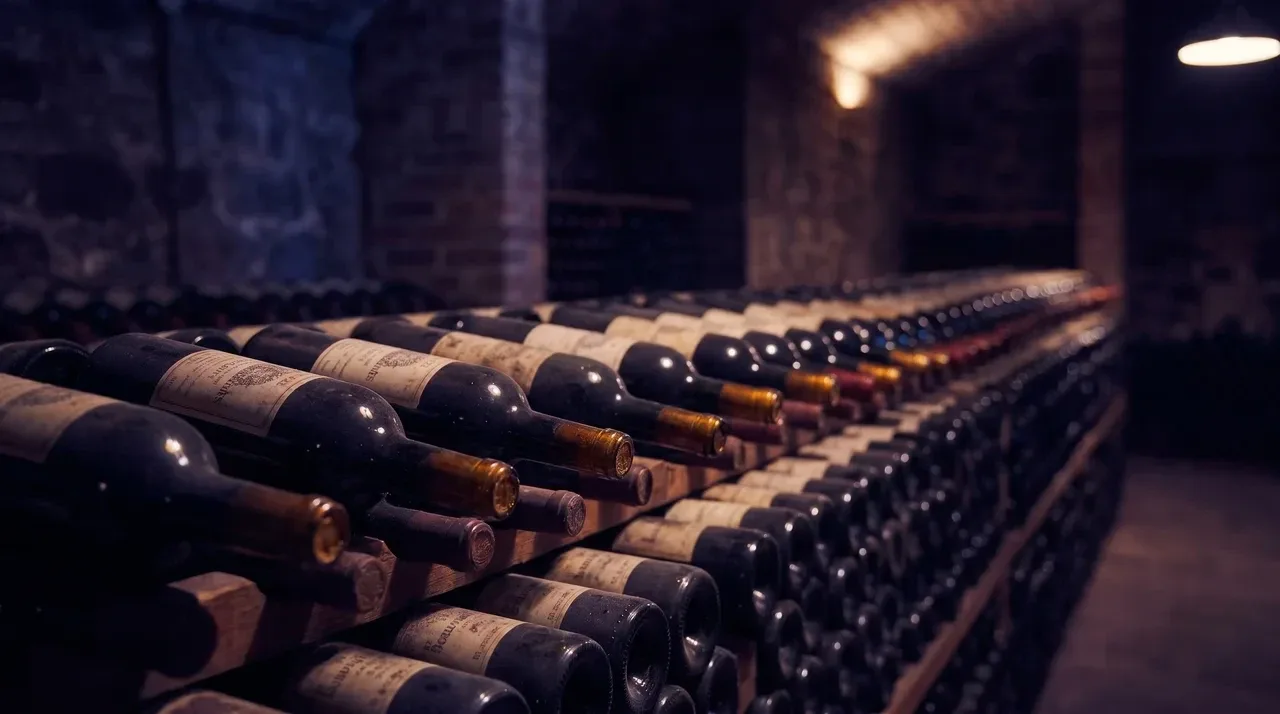
A genuine inflation hedge rests on four structural qualities. Central banks must be powerless to dilute its worth through monetary expansion. Buyers need to want it regardless of what happens to interest rates or equity portfolios. Supply has to be genuinely restricted, not easily replicable. And consumable collectibles bring one bonus: every bottle that reaches a glass vanishes forever, gradually tightening the available pool and pushing remaining inventory higher over time.
Wine and whisky check every box. The evidence is striking. When markets panic-hit in March 2020 and stock indices suffered steep double-digit declines, the Liv-ex 1000 fell only 4%. During the aggressive borrowing-cost rises of 2022 and 2023, fine wine prices remained remarkably steady because the buyer base consists of collectors driven by scarcity, not traders chasing momentum.
Wine and Whisky as Inflation Hedges in 2026 — How They Compare to Gold, TIPS and Real Estate
Three properties make a real asset a useful inflation hedge: it cannot be devalued by monetary policy, it has demand independent of the financial system, and its supply is meaningfully constrained. Wine and whisky meet all three, and add a fourth advantage — every bottle consumed permanently shrinks the available supply, creating a kind of organic deflation within the asset class itself.
Why Wine Is A Resilient Investment | Vinovest CEO Anthony Zhang
Vinovest CEO and co-founder Anthony Zhang shares why fine wine is a resilient alternative investment during high inflationary ...
- Channel: Moneywise
Why Wine and Whisky Stand Out Among Inflation Hedges in 2026
Over extended periods, fine wine has beaten the IMF's global consumer price index and, across the past hundred years, has also outpaced equities, precious metals, and artwork. That track record matters when inflation uncertainty dominates headlines.
Momentum is building. Fine wine demand expanded about 16% through 2025, and UK wealth managers increasingly view the category as a portfolio stabilizer — 34% now point to its self-contained demand cycle as a shield against market turbulence, up from 30% twelve months earlier.
- Low correlation with stock markets reduces overall portfolio risk.
- Scarcity-driven pricing insulates values from monetary debasement.
- Shrinking supply from consumption creates compounding scarcity over time.
How They Compare to Gold, TIPS, and Real Estate
Each traditional hedge brings distinct strengths, and the smartest inflation-resistant portfolios typically hold a blend rather than concentrating on a single asset.
Gold offers unmatched liquidity and instant recognition around the world, but it does not disappear when held — its supply merely shifts hands. TIPS protect against inflation directly through government-guaranteed principal adjustments, yet their returns track coupon mechanics rather than collector demand. Real estate generates income and tangible utility, but transaction costs and illiquidity can delay exits when capital is needed most.
Wine and whisky bring something different: a consumer demand channel that operates independently of financial markets, plus the unique property that opening a bottle permanently removes it from the investable universe. Over twenty years, fine wine has returned roughly 7–10% annually on the Liv-ex 1000 compared with about 6–7% for gold, while also showing smaller drawdowns during equity sell-offs.
- Gold — highest liquidity, no consumption-driven scarcity, steady but slower real returns.
- TIPS — direct inflation indexing, government-backed, limited upside beyond coupon payments.
- Real estate — income generation, tangible utility, high transaction friction and illiquidity.
- Fine wine — shrinking supply through consumption, collector demand independent of rates, strong long-run returns with modest drawdowns.
- Rare whisky — explosive recent growth (~280% over ten years per Knight Frank), but thinner liquidity and lower price transparency than wine.
Time Horizons and Portfolio Fit
Wine and whisky reward patience but suit slightly different timelines. Fine wine typically requires a five-to-ten-year hold to realize meaningful appreciation, while single malt and rare blended whisky often finds its peak liquidity window between four and eight years. That difference lets investors stagger exit points within a single real-assets allocation.
The strongest case emerging from recent analysis is holding both categories rather than choosing one. Wine provides steadier compounding with deeper market infrastructure, whereas whisky has delivered steeper percentage gains over the last decade — albeit with sharper corrections and less transparent pricing. For investors seeking a broader view of alternative assets, our guide to collectible investments in 2026 covers the full landscape.
- Wine: 5–10 year typical holding period for optimal returns.
- Whisky: 4–8 year typical holding period with higher volatility and growth potential.
- Diversifying across both smooths entry and exit timing across market cycles.

Practical Pathways Into the Market
There are three main ways to build a position, each suiting a different level of involvement and expertise.
Self-directed acquisition through specialist merchants, auction houses, and independent brokers gives maximum control and keeps ongoing costs minimal. The trade-off is that you assume responsibility for authentication, climate-controlled storage, insurance, and eventual resale. This path suits serious collectors who already have the time and infrastructure to manage physical inventory.
In-bond holding through established fine wine merchants preserves provenance records, defers duty and VAT until the point of sale or delivery, and ensures professional storage conditions. This approach works exceptionally well for blue-chip Bordeaux and Burgundy, though the merchant infrastructure for whisky remains considerably thinner.
Managed platform models handle sourcing, authentication, storage, and resale on your behalf. A documented track record shows over $27. 5 million returned to more than 200,000 clients, with 1. 7 million bottles currently under professional custody. Exit examples include a high-rye bourbon cask batch realizing a 30. 7% return within seven months. Fee structures and minimum investment tiers vary — details are available on the pricing page.
- Self-directed: maximum control, lowest fees, full responsibility for storage and authentication.
- In-bond: tax-deferred, professionally stored, ideal for blue-chip wine; limited whisky options.
- Managed platforms: hands-off approach with proven exit examples and ongoing custody oversight.
Key Considerations Before Investing
All return figures referenced here come from independent index providers including Liv-ex, Knight Frank, and the World Gold Council. Historical performance does not guarantee future results, and illiquid collectible assets can experience periods of stagnant or negative pricing.
For a deeper examination of the wine investing landscape itself, consult our comprehensive guide to wine investing, which covers provenance verification, storage best practices, and auction strategy.
Frequently asked questions
Which source detail matters most when evaluating Wine and Whisky as Inflation Hedges in 2026?
Volatility resilience stands out. During the March 2020 market crash, while global equities posted double-digit losses, the Liv-ex 1000 dropped just 4% — demonstrating how consumer-driven demand can insulate collectible assets from financial panic.
What should people verify before relying on Wine and Whisky as Inflation Hedges in 2026?
Recent demand trends and institutional confidence matter. Fine wine demand grew approximately 16% in 2025, and 34% of UK wealth managers now highlight the asset class's self-contained demand cycle as a key resilience factor — rising from 30% the prior year, signalling growing professional conviction.
Can wine and whisky replace gold or TIPS in an inflation portfolio?
They should complement rather than replace traditional hedges. Gold remains unbeatable for instant liquidity, and TIPS provide direct government-backed inflation indexing. The most robust inflation-resistant portfolios combine several real assets, using wine and whisky for their scarcity premium and low equity correlation alongside gold and property for stability and liquidity.
Is whisky a better inflation hedge than wine given its recent outperformance?
Rare whisky has posted impressive gains — roughly 280% over the past decade on Knight Frank measures compared with fine wine's steadier trajectory. However, whisky carries thinner liquidity, less pricing transparency, and sharper correction risk. Most investors benefit from holding both categories rather than concentrating in whichever has recently outperformed.