If you would like additional context on the broader category, these resources are worth reviewing: our Guide to South African Wine, the comprehensive Wine Investing: The Complete Guide to Building a Portfolio, and 12 Best Investment Wines: Top Bottles & Brands to Watch.
South Africa now counts itself among the most exciting frontiers in fine wine investment, and the talent driving that shift is undeniably world-class. Eben Sadie recently received the International Winemaker of the Year title from the Master of Wine Institute, while Chris and Andrea Mullineux have earned genuine global respect through their meticulous work with ancient bush vines and the distinctive schist soils of the Swartland region. Together with a growing cohort of producers, they are reshaping how collectors view the Cape.
South African Wine Investment — Kanonkop, Sadie Family and the Cape's Rise in 2026
For more information on South African wine or investing in wine, check out these other posts: Guide to South African Wine, Wine Investing: The Complete Guide to Building a Portfolio and 12 Best Investment Wines: Top Bottles & Brands to Watch.
Cape Town vs The World — Is the Cape Winelands Actually Better Than Bordeaux?
The Cape Winelands produce some of the most complex, terroir-driven wines on earth — and the wine world still hasn't noticed.
- Channel: Cape Town Chronicles
The first details to notice about South African Wine Investment — Kanonkop, Sadie Family and the Cape's Rise in 2026
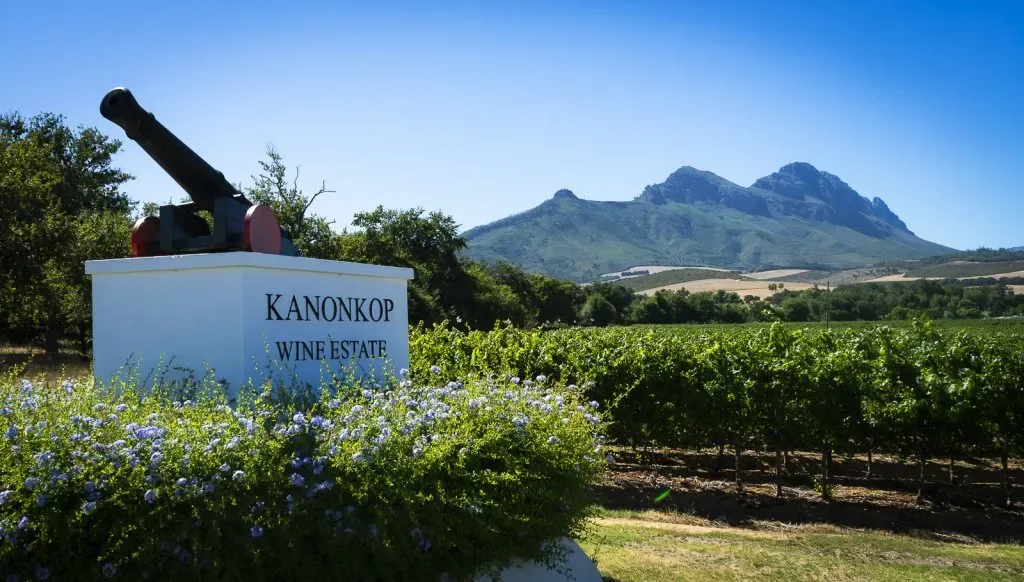
The numbers speak for themselves when it comes to top-tier producers. Kanonkop's 2015 Paul Sauer climbed from approximately $67 to around $352 over the 2019-to-2020 window — a gain that amounted to roughly 400 percent — and a record-setting auction held in July 2024 went further to confirm that serious collector appetite remains firmly intact for the region's most sought-after labels.
The vine age advantage is equally compelling. South Africa shelters some of the oldest continuously cultivated vineyards anywhere outside the European continent, including pre-phylloxera specimens and centenarian bush vines that collectors increasingly prize for their authentic expression of place and the concentrated fruit character that such low-yielding mature wood delivers.
Market plumbing is also maturing at a pace that reflects the region's rising profile. Strauss & Co has established dedicated South African wine sale calendars, while Liv-ex has documented steadily rising trading volumes even though Cape wines remain noticeably underrepresented on the platform's flagship indices — a structural gap that many investors interpret as room for growth rather than a warning sign.
What changes the day-to-day experience of South African Wine Investment — Kanonkop, Sadie Family and the Cape's Rise in 2026
At the heart of the investment case sits a striking value discrepancy. Even the most celebrated South African bottles currently trade at only a fraction of the price commanded by equivalent-calibre Napa Cabernets, Bordeaux growths, or Burgundy grand crus — and that pricing gap is precisely what makes the region such an attractive proposition for portfolio-minded buyers.
No estate illustrates the region's dual capacity for deep history and contemporary excellence better than Klein Constantia. One of the world's oldest wine estates, originally established in 1685, has seen its modern iteration revitalized under winemaker Matt Day, whose work has reasserted the property's standing with a celebrated Sauvignon Blanc program and a revival of the legendary Vin de Constance dessert wine — once enjoyed by European aristocracy and, according to longstanding accounts, the personal preference of Napoleon during his final years on Saint Helena.
Among other names that consistently attract collector attention are Boekenhoutskloof, the historic Meerlust estate (notably for its Rubicon), Hamilton Russell Vineyards (which this year marks five decades of operation with a particularly strong Pinot Noir lineup), Rall Wines, and Porseleinberg — the single-vineyard Syrah project born from the Boekenhoutskloof family's own vineyard holdings.
Where small choices matter most with South African Wine Investment — Kanonkop, Sadie Family and the Cape's Rise in 2026
Securing allocation from the finest producers often requires a proactive approach. Many of the most coveted names — Sadie Family and the Mullineux operation among them — distribute largely through private allocation lists and a network of specialist importers instead of conventional retail channels, making it worthwhile for serious buyers to cultivate relationships with South African wine merchants who can offer early access at release pricing.
When it comes time to realize value, Strauss & Co and similar regional auction houses run finely curated sales that deliver the most transparent secondary market pricing available for the category today. International interest, particularly from the United Kingdom and broader Europe, continues to add momentum to this emerging market.
Only a handful of producers — Kanonkop and Sadie Family Wines leading the way — have accumulated the kind of documented price appreciation and headline auction results that signal genuine investment credibility. The rest of the market remains comparatively youthful and illiquid when measured against Bordeaux or Burgundy, and with zero South African wines currently appearing on the Liv-ex Fine Wine 1000, the category rewards patient, diversification-oriented investors far more than those chasing short-term liquidity.
The practical patterns behind South African Wine Investment — Kanonkop, Sadie Family and the Cape's Rise in 2026
Kanonkop Paul Sauer holds the most thoroughly documented performance record in the category, highlighted by a landmark vertical auction event in 2024 and a perfect 100-point critical score awarded to its 2015 vintage. Meanwhile, Sadie Family Wines' Columella and Palladius stand out as the South African bottles exhibiting the most reliable secondary market trading behaviour across recent years.
Historically, Cabernet Sauvignon and Bordeaux-inspired blends anchored by Kanonkop have served as the region's investment benchmark. Today, however, the more critically electrifying wave comes from the Swartland — where old-vine Syrah, Chenin Blanc, and Grenache crafted by Sadie Family and the Mullineux team are redefining what international collectors expect from South African wine.
The Cape's fine wine narrative is still unfolding, yet the core ingredients are impossible to overlook: centuries-old vineyards, winemaking talent that competes on the global stage, and pricing that remains well below the level commanded by peer-quality wines from other celebrated regions. For a longer perspective on how a developing category like this might integrate alongside more established wine investments, the broaderwine-investing guide provides useful context.
Frequently asked questions
What should people verify before relying on South African Wine Investment — Kanonkop, Sadie Family and the Cape's Rise in 2026?
Market infrastructure is improving quickly but remains incomplete. Specialist auction houses such as Strauss & Co have created dedicated South African wine sale programmes, and Liv-ex has noted growing trading activity around Cape producers, yet the region still occupies only a marginal position on Liv-ex's flagship indices — a signal that the secondary market is advancing but has not yet reached the maturity of traditional investment wine categories.