
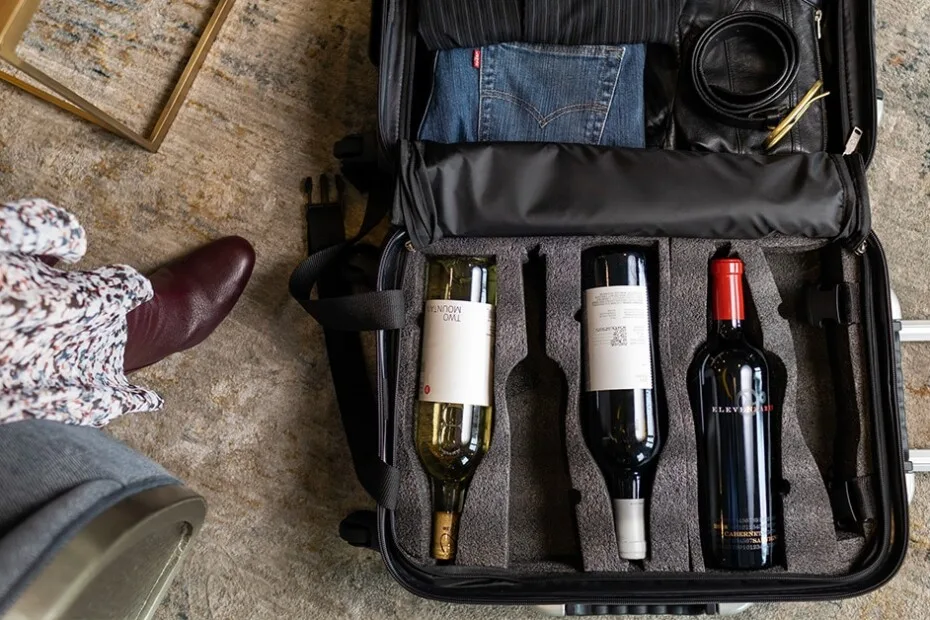
Bringing wine home from a vineyard or carrying bottles to a tasting is much easier when every bottle has its own protected cavity. A regular suitcase padded with clothing can work in a pinch, but it leaves glass vulnerable to movement, crushed labels, and pressure from other items. Dedicated wine luggage uses shaped foam, dividers, or rigid compartments to keep bottles separated during handling.
The best choice depends on how many bottles you carry, whether you are checking the case on a flight, and how much empty-case weight you can accept.
Best Wine Luggage for 2026 — Must-Have Wine Suitcases For Travel
For checked air travel, choose a rigid wine suitcase with bottle-shaped foam, enough room for your bottle formats, a secure closure, and an empty weight that leaves a safe margin under your airline’s baggage limit.
This is how to pack your cruise carry on with alcohol and beverages!🛳️🛳️ #cruisetips #cruise
A practical YouTube walkthrough related to Best Wine Luggage for 2026 — Must-Have Wine Suitcases For Travel.
- Channel: The YAYsayers
Choose the Right Type of Wine Luggage
A hard-shell wine suitcase is the strongest option for checked baggage because the shell resists compression and the foam keeps bottles from striking one another. Models with removable inserts can switch between an all-bottle layout and a mixed layout for wine plus clothing. The trade-off is weight: a robust shell, wheels, locks, and dense foam use part of the airline allowance before the first bottle goes in.
Soft totes and neoprene carriers are convenient for a dinner, picnic, or short drive, but they are not substitutes for checked-flight protection. Backpack carriers free both hands and work well for local trips, while rugged professional cases favor maximum protection over lightness. Shipping boxes are another option when carrying the case through an airport is impractical.
Compare Capacity, Bottle Fit, and Empty Weight
Capacity labels such as six, eight, ten, or twelve bottles assume standard shapes. Champagne bottles are wider, Burgundy bottles have broader shoulders, and magnums need dedicated inserts. Measure the bottles you expect to carry and compare those dimensions with the foam cavities. A case that technically holds twelve standard bottles may hold fewer once larger formats are mixed in.
Empty weight matters just as much as capacity. The source lists the 12-bottle VinGardeValise at about 13. 5 pounds and the 12-bottle Vino-Voyage at about 13. 17 pounds, while the six-bottle Vino Via is listed at 7. 8 pounds. Use current manufacturer specifications, place the packed case on a luggage scale, and leave a margin rather than aiming exactly at an airline limit.
Protection Features Worth Paying For
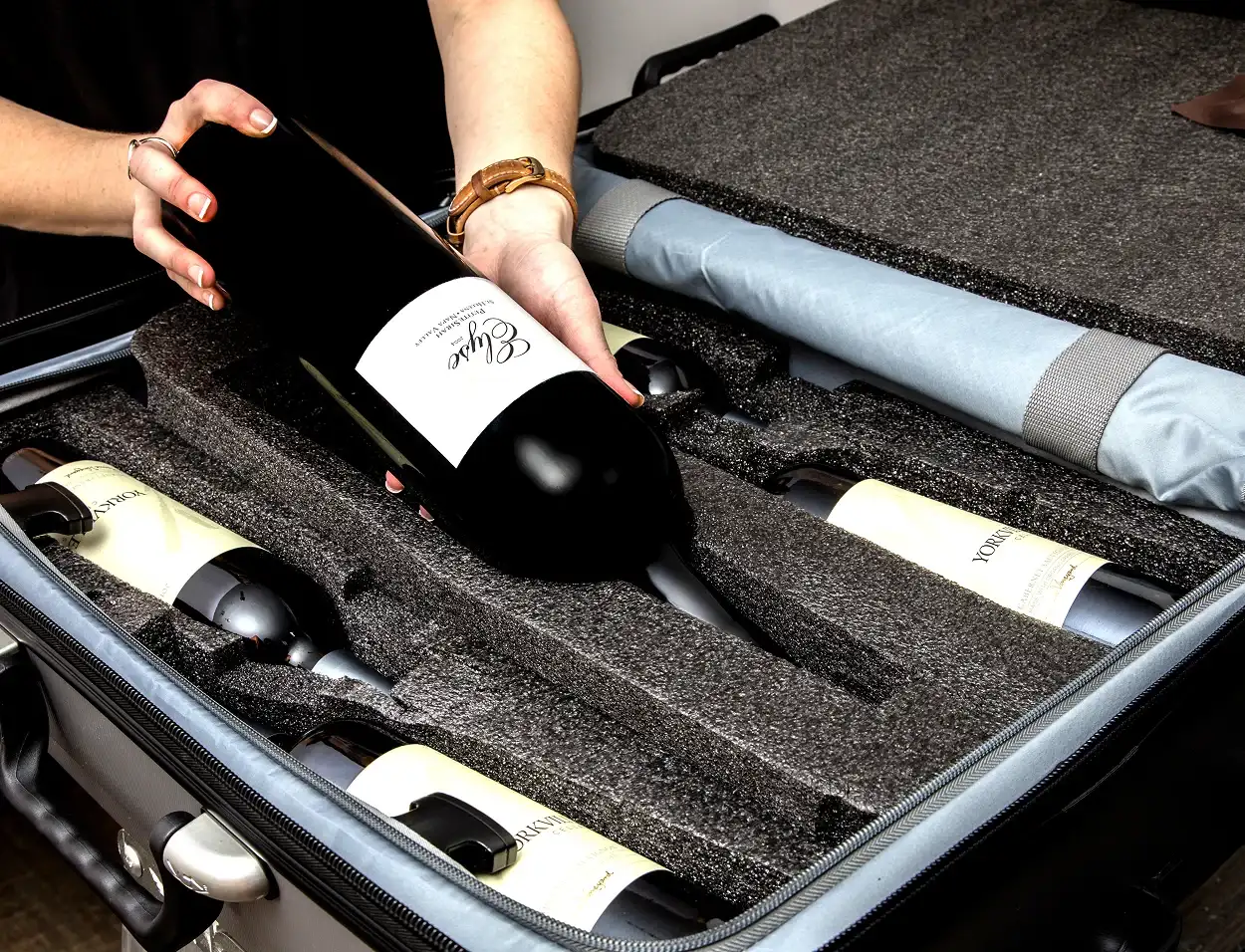
Look for closed-cell or high-density foam that grips the bottle body without forcing the neck. Reinforced corners, a rigid shell, strong zippers, and straps that keep the case closed add protection when baggage is stacked or dropped. Smooth spinner wheels and a stable telescoping handle also matter because a heavy case is more likely to be bumped when it is awkward to steer.
A TSA-compatible lock may prevent casual opening, but it does not replace careful packing. Labels should face away from rough seams, no bottle should rattle when the closed case is moved gently, and accessories such as corkscrews should sit in a separate pocket. Insulation helps buffer short temperature swings; it cannot safely cool wine through prolonged heat exposure.
Use the safest next step when information is incomplete
CasePro, Wine Enthusiast Vino-Voyage, boldworks, a 10-bottle Wine Bottle Suitcase, and the six-bottle Vino Via. VinGardeValise emphasizes customizable patented inserts, a polycarbonate-style protective shell, spinner wheels, a TSA-compatible lock, and a long limited warranty. CasePro is a heavier professional-style carrier with wheeled handling, adjustable bottle spaces, and substantial insulation.
Vino-Voyage and boldworks target travelers who want 12-bottle capacity in a familiar rolling-suitcase format. The 10-bottle option trades two cavities for a lighter listed empty weight, while Vino Via focuses on six bottles, padded dividers, anti-theft zippers, and a compact rolling design. Product details and availability change, so treat these names as a comparison shortlist and verify current specifications before purchasing.
Pack Wine for a Flight Step by Step
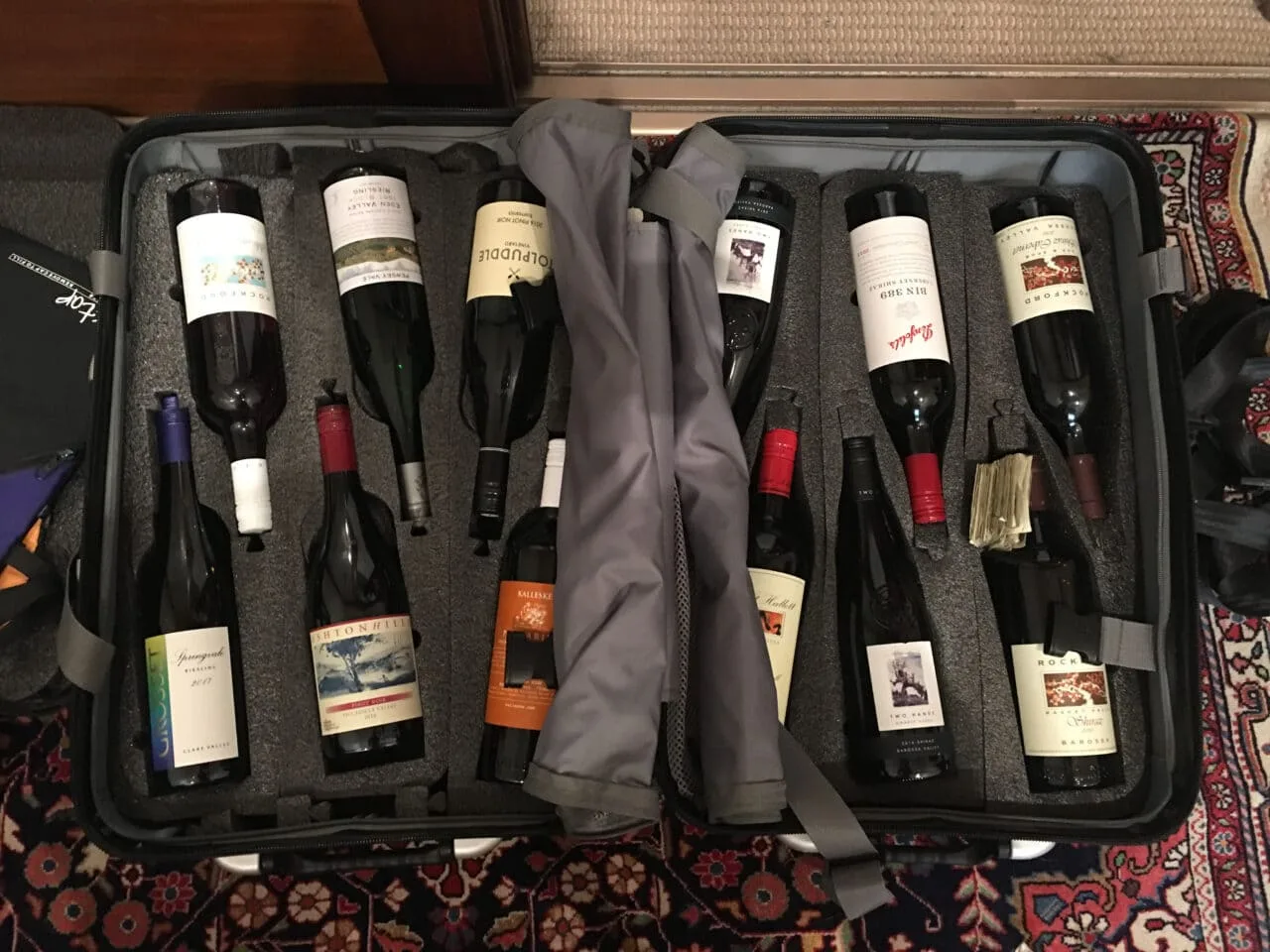
First confirm that the airline accepts alcohol in checked baggage and review the rules for alcohol percentage, quantity, customs declarations, and your destination. Inspect each bottle for a damaged closure or hairline crack. Seat every bottle fully in its cavity, place any removable foam cap over the neck, and fill only the spaces the manufacturer says can be used for clothing or accessories.
Close the case without forcing it, lock it if appropriate, and weigh it on a luggage scale. Add identification inside and outside the case, photograph the packed layout, and keep receipts for valuable bottles. At arrival, inspect the shell before leaving baggage claim. If wine has been shaken or exposed to large temperature changes, let it rest upright in a cool, stable place before opening.
A Practical Buying Checklist
Start with your real trip pattern. One or two bottles carried by car call for a different product than twelve bottles checked several times a year. Compare cost per protected bottle, replacement foam availability, warranty terms, wheel and handle construction, and whether the insert can accommodate the regions and bottle styles you buy most often.
Before ordering, check external dimensions against current baggage rules and read recent owner reports about zipper life, wheel durability, foam odor, and customer service. Frequent travelers may benefit from a repairable premium case; occasional travelers may be better served by a smaller carrier or a purpose-built shipping box. The right wine luggage is the case you can pack correctly, lift safely, and keep within the rules of the trip.
Frequently asked questions
Can wine go in a carry-on bag?
Full wine bottles normally exceed the liquid limit used at security checkpoints, so travelers generally place them in checked baggage unless a bottle was purchased after security and the itinerary permits it. Confirm the current rules with the airport and airline before travel.
How many bottles fit in a wine suitcase?
Common dedicated cases hold six, eight, ten, or twelve standard 750 mL bottles. Wider Champagne or Burgundy bottles and magnums may reduce usable capacity unless the manufacturer offers matching inserts.
Does insulated wine luggage keep bottles cold?
Insulation slows temperature change for a limited time, but it is not active refrigeration. Keep the case away from direct sun, hot vehicles, and other prolonged heat exposure.
What should I check before buying a wine suitcase?
Check bottle fit, empty weight, packed dimensions, shell and foam construction, wheels, handle, closure, lock, warranty, and replacement-part availability. Then compare those details with your airline’s current baggage limits.