
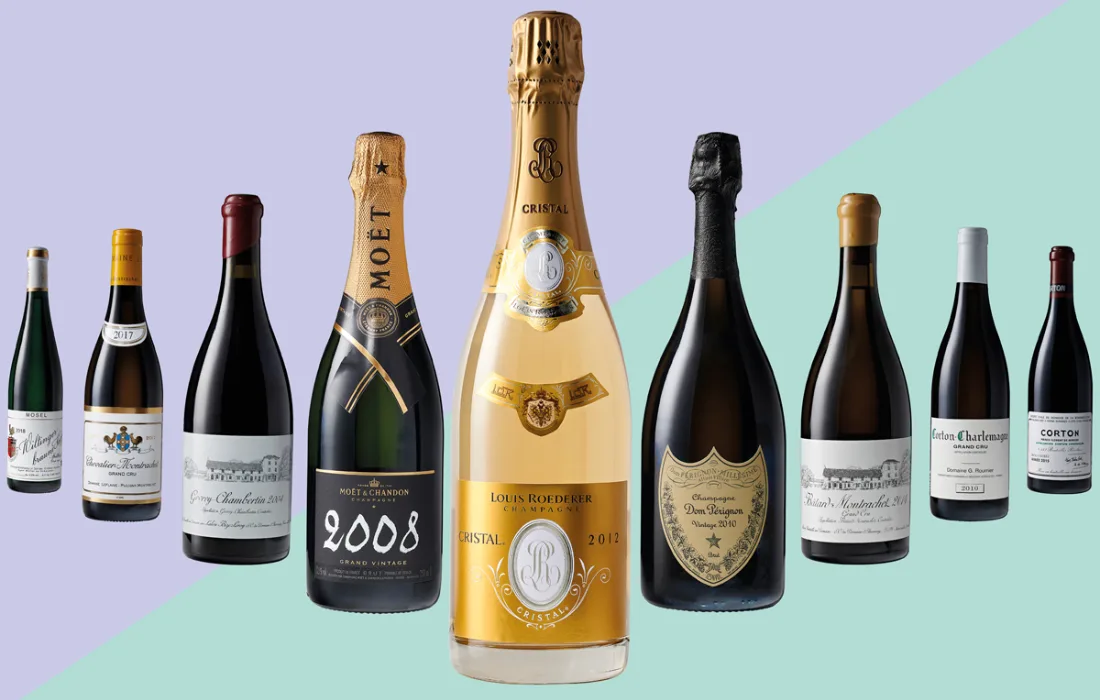
Some bottles of wine sell for more than a premium automobile, and occasionally even a modest home. Behind those staggering price tags lies a convergence of factors: extraordinary growing conditions, deep historical roots, razor-thin production volumes, and ferocious demand from collectors around the globe.
If you are curious about building a wine portfolio that delivers meaningful returns over time, our comprehensive Wine Investing Guide covers everything you need to know.
25 Most Expensive Wines in the World — 2026
What makes a bottle of wine worth more than a luxury car—or even a house? The world's most expensive wines represent the intersection of exceptional terroir, historical significance, extreme scarcity, and collector demand.
The World's Most Expensive Wine Comes From a Shed 🍷
no château needed #wine #winetok #luxurylifestyle #funfacts #Shorts.
- Channel: The Vine Chronicle
Key factors that determine wine value
Terroir sits at the foundation of every valuable wine. This term describes the distinctive marriage of soil composition, local climate patterns, and geographic positioning that gives each vineyard its character. In Burgundy, Grand Cru sites such as Romanee-Conti span merely 1. 8 hectares—roughly 4. 5 acres—and yield around 6,000 bottles each year. That combination of ideal conditions and near-impossible scarcity means the resulting wines cannot be reproduced anywhere else on Earth.
Historical legacy amplifies value enormously. Properties like Chateau Lafite Rothschild, whose origins trace back to 1234, and Domaine de la Romanee-Conti, founded in 1760, carry centuries of accumulated prestige. Decades of refined technique, handed down through families and shared expertise, ensure that wines from these estates maintain remarkably consistent standards of excellence year after year.
Weather plays a decisive role in vintage quality. When temperatures, rainfall, and sunlight align throughout the growing season, the result can be a legendary year. The 1945 vintage, emerging from the final year of World War II, produced outstanding wines across Europe under extraordinarily difficult circumstances. More recently, 2010, 2015, and 2016 have been widely celebrated as exceptional. A great vintage from a top producer can command anywhere from three to ten times the price of an average year from the same estate.
How scarcity and expertise shape market prices
Supply constraints naturally push prices higher. Screaming Eagle, one of Napa Valley's most coveted labels, releases only about 500 cases each year. Domaine Leroy's Musigny bottling comes in at well under 300 cases annually. When collectors, Michelin-starred restaurants, and investment funds worldwide compete for quantities that barely register on the global market, prices climb steeply.
Critical acclaim can transform a wine's market position overnight. A perfect 100-point rating from influential critics such as Robert Parker or Jancis Robinson has the power to double or triple a bottle's value almost immediately. Major publications including Wine Spectator, Decanter, and Wine Advocate consistently shape collector sentiment and fuel demand for highly rated selections.
Provenance matters enormously at the highest price tiers. Bottles kept in professional storage—maintained at roughly 55°F with 70% humidity, shielded from light, and free from vibration—fetch significant premiums. Conversely, any uncertainty about a bottle's history raises red flags among buyers. Thorough documentation of cellar conditions, prior ownership, and chain of custody is essential for transactions involving high-value bottles.
Where small details make the biggest difference
Wines tied to compelling historical narratives attract passionate buyers. Bottles associated with figures like Thomas Jefferson, vessels recovered from ocean wrecks, or vintages marking pivotal moments such as the liberation of Europe in 1945 carry an emotional resonance that transcends mere taste. These stories command premiums far beyond what the liquid alone would justify.
Format size influences both aging potential and price. Larger bottles—magnums, jeroboams, and imperials—expose less oxygen per unit of wine, allowing them to develop more gracefully over time. They are also produced in far smaller numbers. A pristine Imperial-format Chateau Petrus from a great year can sell for up to twenty times the cost of a standard 750ml bottle from the same vintage.
Among the priciest wines available today, Domaine Leroy consistently dominates the top rankings. This legendary domaine is the brainchild of Lalou Bize-Leroy, one of the most formidable figures in modern winemaking.
The story behind Domaine Leroy's dominance
Lalou Bize-Leroy was born in 1932 into a family deeply rooted in Burgundy's wine world. Her father, Henri Leroy, co-owned Domaine de la Romanee-Conti, immersing her in the craft from childhood. She later served as co-director of DRC from 1974 through 1992, during which time she developed one of the most refined palates in the industry and an encyclopedic knowledge of Burgundy's greatest vineyards.
In 1988, Lalou launched Domaine Leroy after acquiring prized vineyard holdings from Charles Noellat and Philippe Remy. The portfolio included some of the most coveted Grand Cru sites in Burgundy: Musigny, Chambertin, Richebourg, Romanee-Saint-Vivant, and Clos de Vougeot.
What truly distinguishes Domaine Leroy is Lalou's unwavering dedication to biodynamic farming. Since the domaine's founding in 1988, every vineyard has been cultivated without synthetic chemicals, pesticides, or herbicides. Yields are deliberately kept extremely low—often 50 to 80 percent below typical Burgundian averages—which concentrates flavor and complexity to an extraordinary degree.
Investment potential and market performance
This disciplined approach yields wines of breathtaking intensity and purity, but in vanishingly small quantities. The 2009 Domaine Leroy Musigny, currently recognized as the world's most expensive wine by average market price at $96,910 per bottle, was produced in fewer than 200 cases. Scarcity at this level ensures that once allocated, these bottles rarely reappear on the open market.
Domaine Leroy wines have demonstrated outstanding investment performance. The 2009 Musigny Grand Cru has appreciated more than 400 percent since its original release. Collectors value these bottles not only for their financial trajectory but also for their extraordinary aging potential, developing remarkable complexity over decades in the cellar.
The broader fine wine market supports this thesis. The Liv-ex Fine Wine 1000 index, which monitors 1,000 of the world's most sought-after bottles, has generated annualized returns of approximately 8 to 10 percent over the past two decades. During periods of stock market turbulence, fine wine has frequently exhibited low correlation with traditional equity holdings, making it a compelling diversification tool for sophisticated investors.
Frequently asked questions
What is the easiest way to approach 25 most expensive wines in the world 2026?
Begin by identifying one or two producers that genuinely interest you, purchase a single bottle to taste, and let that experience guide your next steps. Start small, learn what resonates with your palate, and expand your knowledge gradually rather than attempting to explore everything at once.
What usually makes 25 most expensive wines in the world 2026 harder than it needs to be?
Collectors often complicate the journey by chasing every highly rated wine without understanding their own preferences, neglecting proper storage conditions, or purchasing from unreliable sources. A disciplined, focused approach—prioritizing provenance and personal taste over reputation alone—keeps the experience manageable and enjoyable.
How do you keep 25 most expensive wines in the world 2026 practical over time?
Establish a clear collecting strategy, buy only from trusted merchants with documented provenance, and store every bottle in appropriate conditions. Review your selections periodically, taste what you own, and adjust your approach based on what you actually enjoy rather than following trends blindly.