
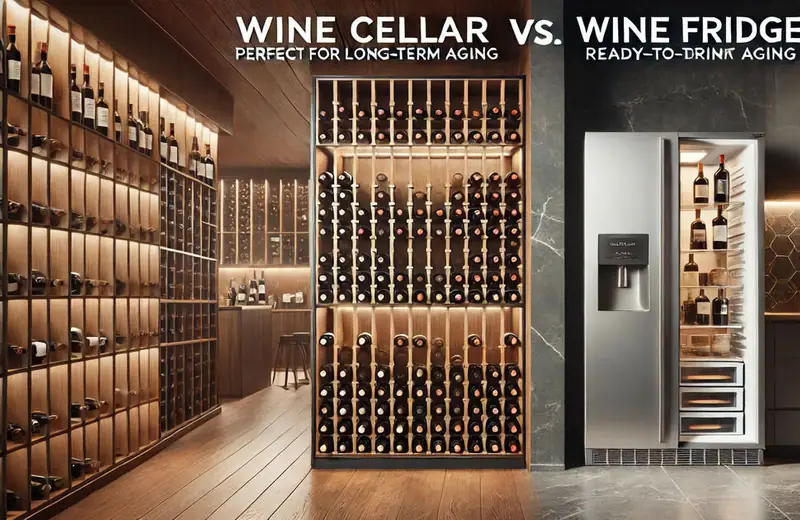
Choosing how to store your wine is a big decision. Should you go for a wine cellar or wine fridge ? A wine cellar is perfect for long-term aging and large collections. A wine fridge, on the other hand, works well for short-term storage and smaller spaces. Both have their own benefits depending on your needs, space, and budget. Let’s take a closer look at Wine Cellar vs Wine Fridge what makes each one special.
A wine cellar is a dedicated room for keeping wine in the best condition over a long time. It keeps the temperature and humidity steady, which is important for aging wine properly. Some cellars are simple setups in basements, while others are luxury spaces with custom designs, lighting, and racks.
Wine Cellar vs Wine Fridge: What’s Best for Wine Collection?
Choosing how to store your wine is a big decision. Should you go for a wine cellar or wine fridge ? A wine cellar is perfect for long-term aging and large collections. A wine fridge, on the other hand, works well for short-term storage and smaller spaces. Both have their own benefits depending on your needs, space, and budget. Let’s take a closer look at Wine Cellar vs Wine Fridge what makes each one special.
What to Know
Key Features of Wine Cellars
A wine fridge is a smaller appliance designed to keep wine at the right temperature. It’s great for homes without a lot of space and for short- or medium-term storage. They are available in various sizes, from countertop models to larger, built-in units.
Key Features of Wine Fridges
- Wine Cellar vs Wine Fridge: Key Differences
- Advantages of Wine Cellars
- Advantages of Wine Fridges
- Storage Needs: Long-Term vs. Short-Term
- Wine Collection Size and Space Considerations
- Protection from Vibration and UV Light
- Customization and Aesthetic Appeal
- Cost Analysis: Wine Cellar vs Wine Fridge
- Conclusion: Which is Best for You?
- Is a wine fridge the same as a cellar?
- Can you cellar wine in a wine fridge?
- What is the difference between a wine cooler and a wine refrigerator?
Advantages of Wine Cellars
Wine cellars create the best environment for aging wine. They keep the temperature steady at around 55°F and humidity between 50–70%. These conditions prevent problems like oxid /study.com/academy/lesson/video/what-is-oxidation-definition-process-examples.html ation , sediment disturbance , and cork shrinkage, which helps wine develop its flavor over many years.
If you have a big collection or plan to grow one, a wine cellar is ideal. Some wine cellars can store thousands of bottles, making them perfect for serious wine lovers or investors.
Luxury and Personalization
Wine cellars are often designed to be beautiful, with custom racks , mood lighting, and even tasting areas. These luxury designs not only showcase your collection but can also add value to your home.
UV and Vibration Protection
Because wine cellars are usually built into a home, they naturally block UV light and protect wine from vibrations. This keeps the wine safe and ensures it ages properly without being disturbed.
Advantages of Wine Fridges
For people who don’t want to spend a lot, a wine fridge is a cost-effective way to keep wine at the right temperature. You can start with a small model for just a few hundred dollars.
Wine fridges come in different sizes, from small countertop models to larger freestanding units. They’re easy to move, so they’re perfect for apartments or homes where space is limited.
Some wine fridges have two cooling zones, so you can store red and white wines at their ideal temperatures in the same unit.
Modern wine fridges are designed to use less electricity. Many include LED lighting , UV-protected glass , and efficient compressors , which help save energy while protecting your wine.
Storage Needs: Long-Term vs. Short-Term
If you’re aging wines like Bordeaux or Barolo , a wine cellar is the best choice. These wines need consistent temperature and humidity over many years to develop their full flavor and complexity.
Short-Term and Medium-Term Storage
Wines you plan to drink soon, like Sauvignon Blanc or ready-to-drink reds , can go in a wine fridge. They don’t need to age as long, so the fridge’s cooling system works perfectly for these.
Wine Collection Size and Space Considerations
- Small Collections (Under 100 Bottles) : A compact wine fridge is perfect for beginners or people who only keep a few bottles. It saves space and is affordable.
- Medium Collections (100–500 Bottles) : If you’re growing your collection, consider a larger wine fridge or a smaller wine cellar. A fridge is cheaper, but a cellar provides better aging conditions.
- Large Collections (500+ Bottles) : For big collections, a built-in wine cellar is the best option. It offers the space and stability needed for long-term storage.
Energy Efficiency and Environmental Impact
Wine cellars require energy for climate control, especially if they’re large. However, modern cellars often include eco-friendly insulation and energy-efficient cooling systems to reduce their environmental footprint.
Wine fridges are smaller and generally more energy-efficient. Models with advanced compressor technology and LED lighting are especially eco-friendly. However, larger fridges may use more power.
- Wine Cellars naturally block UV rays and vibrations because of their structure. They are ideal for delicate wines that shouldn’t be disturbed.
- Wine Fridges include features like UV-blocking glass and anti-vibration systems , but the compressor’s slight vibrations can still affect sensitive wines over time.
Customization and Aesthetic Appeal
- Fully customizable, with options like modular racks , decorative themes, and tasting rooms.
- They make a statement, showing off your collection in a luxurious way.
- Sleek, modern designs that fit into kitchens or living rooms.
- Adjustable shelves and LED lighting make them stylish, but they lack the grandeur of a wine cellar.
Cost Analysis: Wine Cellar vs Wine Fridge
- Wine Cellars : Building a wine cellar can cost between $15,000 and $100,000+ depending on size, materials, and design. However, they often increase the value of your home.
- Wine Fridges : Much cheaper, with prices ranging from $200 for small models to $5,000 for high-end units. They are a great entry-level option for wine storage.
Conclusion: Which is Best for You?
Final Tip : Start with a wine fridge and upgrade to a wine cellar as your collection grows. This way, you get the best of both worlds and can build your storage around your needs over time.
No, a wine fridge and a wine cellar are not the same. A wine fridge is a small appliance that cools wine for short- to medium-term storage. It’s great for keeping wine at serving temperature and ready to drink. A wine cellar , on the other hand, is a dedicated room or space built to maintain the perfect conditions for long-term wine aging. It offers stable temperature and humidity levels, which help preserve wine for decades.
You can use a wine fridge for short- and medium-term wine storage, but it’s not the best choice for long-term aging. Wine fridges often lack proper humidity control , which is critical to keep corks from drying out over time. For wines that need years to develop their full complexity, a wine cellar is a better option.
The terms wine cooler and wine refrigerator are similar but have slight differences: Wine Cooler : Usually refers to an appliance with a limited temperature range (50–65°F), designed to keep wines at serving temperatures rather than for long storage. Wine Refrigerator : More versatile, with precise temperature control for storing wine short- or medium-term. Some models also have dual zones for different wine types. Both are useful, but neither is ideal for long-term aging compared to a wine cellar.
A wine cellar is a place to store wine, designed to protect and age bottles under optimal conditions. It can be part of a home or a professional space for wine storage. A winery , on the other hand, is a facility where wine is produced. Wineries may include vineyards, fermentation tanks, and bottling areas. While wineries sometimes have their own cellars, a cellar and a winery serve different purposes.
A wine cellar can also be called a: Wine vault Cave à vin (French term) Climate-controlled wine room Luxury wine cellar (if custom-built and designed with aesthetics in mind). These terms are often used interchangeably, especially for high-end wine storage spaces.
Wine fridges cost more than regular refrigerators because they are designed specifically for wine storage. Key features include: Temperature Precision : Keeps wine at a consistent and narrow temperature range. Humidity Control : Prevents corks from drying out. UV-Protected Glass : Blocks harmful light that can damage wine. Anti-Vibration Technology : Prevents movement that can disturb wine sediment. Energy Efficiency : Modern compressors and LED lights minimize energy use while maintaining perfect conditions.
- If you’re a serious collector who wants to age fine wines and has the budget, a wine cellar is the best investment.
- If you’re looking for a smaller, more affordable solution for short-term storage, a wine fridge is the way to go.