
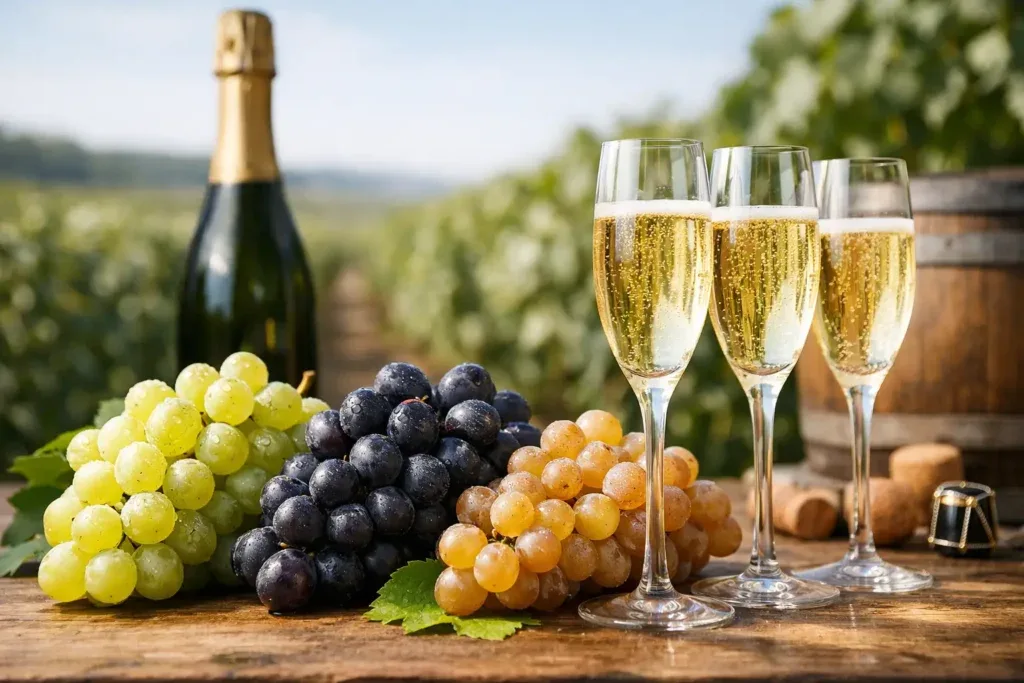
Champagne labels are dense with information that directly impacts the flavor in your glass. Terms like Blanc de Blancs, Brut, and Vintage might seem like minor details, but they signal significant differences in grape composition, sweetness, and aging potential.
Navigating these choices doesn’t require a sommelier degree. By understanding how grape varieties shape texture, how dosage controls sweetness, and what vintage declarations mean for intensity, you can select bottles that match your palate and occasion.
This guide breaks down the key label elements to help you move beyond price tags and prestige, focusing instead on the specific taste profiles each term promises.
How Champagne Grapes Sweetness and Labels Shape What You Taste
Choose Champagne by reading three things together: the grape style, the sweetness term, and whether the bottle is vintage or non-vintage. Those clues are more useful than price alone for predicting freshness, body, fruit, and the best occasion for the wine.
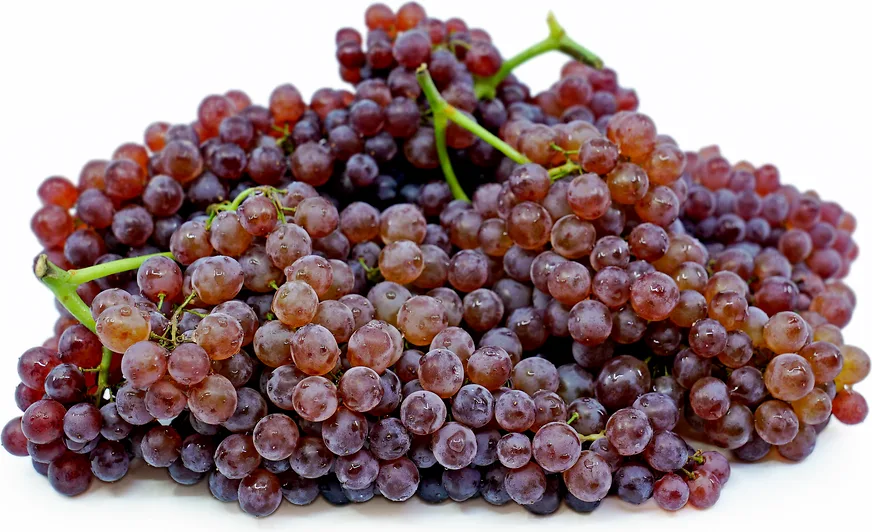
Tasting Jelly Drop Grapes and Champagne Grapes
We tried two new types of grapes. Jelly Drop Grapes (a cross between a green table grape and a red grape) and Champagne ...
- Channel: Wendy Nisley
The Protected Identity: What "Champagne" Actually Means
When you see "Champagne" on a label, it is a legally protected designation of origin. This means the wine was produced within the designated region of France, adhering to strict regulations regarding permitted grape varieties, vineyard practices, and winemaking methods.
Unlike sparkling wines made elsewhere, Champagne must undergo a secondary fermentation in the bottle (the Méthode Champenoise or Tradition). This process creates the fine, persistent bubbles and contributes to the complex yeast-derived flavors known as brioche or toasted notes.
Knowing a bottle is authentic Champagne sets a baseline for quality and production rigor, but it does not guarantee a specific taste. The final profile depends heavily on the producer’s style, the blend of grapes, and the amount of sugar added at the end.
- Look for "Champagne" as the appellation, confirming its French origin.
- Expect secondary fermentation in the bottle as a standard for authentic Champagne.
- Remember that origin ensures provenance, not a uniform flavor profile.
The Grape Trinity: Chardonnay, Pinot Noir, and Meunier
Most Champagne is crafted from three primary grapes: Chardonnay, Pinot Noir, and Pinot Meunier. Each plays a distinct role in the final blend. Chardonnay, the only white grape among them, brings acidity, citrus notes, and elegance. Pinot Noir adds body, structure, and red fruit characteristics. Pinot Meunier contributes approachable fruitiness and softness.
The balance of these grapes determines the wine’s skeleton. A blend heavy in Chardonnay will feel lighter and more acidic, while higher proportions of Pinot Noir create a fuller, more robust mouthfeel. Winemakers adjust these ratios year by year to maintain their house style or highlight vintage conditions.
Understanding these roles helps predict texture. If you prefer crisp, mineral-driven wines, look for high Chardonnay content. For richer, more savory experiences, seek out blends dominated by Pinot Noir or Meunier.
- Chardonnay provides acidity, citrus, and finesse.
- Pinot Noir contributes structure, body, and depth.
- Meunier offers early-drinking fruitiness and approachability.
Decoding Color: Blanc de Blancs, Blanc de Noirs, and Rosé
Blanc de Blancs translates to "white from whites. " These Champagnes are made exclusively from white grapes, primarily Chardonnay. They are typically characterized by bright acidity, floral aromas, and a leaner, more elegant structure. They often pair exceptionally well with seafood and light appetizers.
Blanc de Noirs means "white from blacks. " Despite being made from dark-skinned grapes (Pinot Noir and/or Meunier), the juice is pressed quickly to avoid extracting color. These wines tend to be broader, more powerful, and richer in fruit flavors than Blanc de Blancs, offering more weight for pairing with heartier dishes.
Rosé Champagne achieves its pink hue either through brief skin contact with red grapes or by blending a small amount of still red wine into the base. Contrary to popular belief, rosé Champagne is rarely sweet; most are dry. The color indicates style and complexity rather than sweetness level.
- Choose Blanc de Blancs for crispness and mineral precision.
- Opt for Blanc de Noirs when seeking body and structured fruit.
- Remember that Rosé Champagne is typically dry, not sweet.
Reading the Sugar Scale: From Brut Nature to Doux
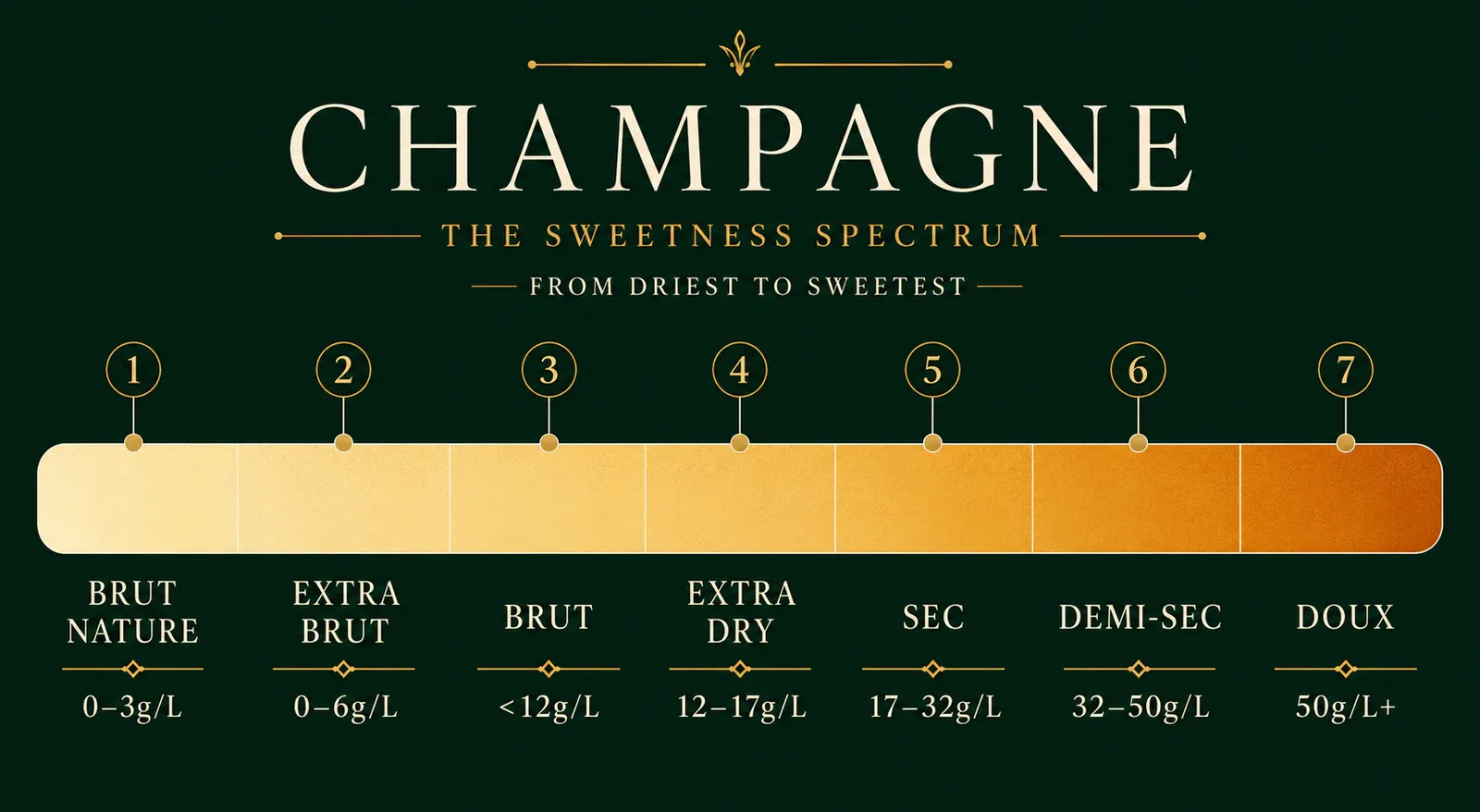
The sweetness level of Champagne is determined by the "dosage," a mixture of wine and sugar added after disgorgement. This step balances the natural acidity of the wine. The terminology can be confusing because the names do not always align with intuitive expectations of sweetness.
Brut Nature (or Zero Dosage) has no added sugar and is extremely dry, highlighting pure fruit and acidity. Extra Brut is also very dry, with minimal residual sugar. Brut is the most common category, offering a balanced dryness that appeals to most palates.
Extra Dry is actually slightly sweeter than Brut, despite its name. Sec is noticeably sweet, while Demi-Sec is quite sweet, making it ideal for desserts. Doux is the sweetest category and is rare. Always check the dosage term if you have a preference for sweetness.
- Brut Nature and Extra Brut are the driest styles.
- Brut is dry; Extra Dry is surprisingly slightly sweeter.
- Demi-Sec is best reserved for dessert or spicy cuisine.
Vintage vs. Non-Vintage: Style, Age, and Value
Non-vintage Champagne is a blend of wines from multiple years, designed to produce a consistent house style year after year. It is often aged for a shorter period (minimum 15 months by law) and offers fresh, fruity characteristics at an accessible price point.
Vintage Champagne is made only in exceptional years, using grapes from a single harvest. It requires longer aging (minimum three years) and develops more complex, nutty, and savory notes over time. Vintage Champagnes express the unique character of that specific year’s weather conditions.
While vintage bottles command higher prices due to rarity and aging costs, non-vintage offerings provide reliable quality and value. Consider vintage for special occasions or aging potential, and non-vintage for everyday enjoyment or earlier consumption.
- Non-vintage ensures consistency and approachable fruit.
- Vintage reflects specific year conditions and greater complexity.
- Price reflects aging time and rarity, not just quality.
Serving and Pairing: Maximizing Label Promises
Temperature significantly affects Champagne’s taste. Serving it too cold mutes aromas and flavors, while serving it too warm accentuates alcohol and reduces freshness. Aim for a serving temperature between 45–50°F (7–10°C) to preserve both bubble vitality and aromatic complexity.
Glassware matters. While flutes preserve bubbles, wider bowls in tulip-shaped or white wine glasses allow aromas to concentrate, enhancing the tasting experience. Pour slowly to minimize foam loss and let the wine breathe briefly before drinking.
Pairing should follow the wine’s style. Crisp Blanc de Blancs complements oysters and salads. Richer Blanc de Noirs stands up to roasted meats and mushrooms. Sweeter Demi-Sec pairs well with fruit tarts or mild cheeses. Match the intensity and sweetness to the dish for harmony.
- Serve chilled but not frozen to preserve aroma and freshness.
- Use wider glasses to enhance olfactory perception.
- Align wine style and sweetness with food intensity.
Frequently asked questions
Is Extra Dry Champagne drier than Brut?
No. Extra Dry is actually slightly sweeter than Brut. For the driest experience, look for Brut Nature or Extra Brut.
Does Rosé Champagne always taste sweet?
No. The pink color comes from grape skins or added red wine, not sugar. Most Rosé Champagnes are Brut and taste dry.
What distinguishes Vintage from Non-Vintage Champagne?
Non-vintage blends multiple years for consistency, while vintage comes from a single exceptional year, offering more complexity and requiring longer aging.
Which Champagne is best for seafood?
Blanc de Blancs, made primarily from Chardonnay, offers the crisp acidity and minerality that pairs beautifully with oysters, sushi, and light fish dishes.